Robert’s Ramblings

a little on life, the universe and everything… …and maybe the odd bit of scuba diving too!

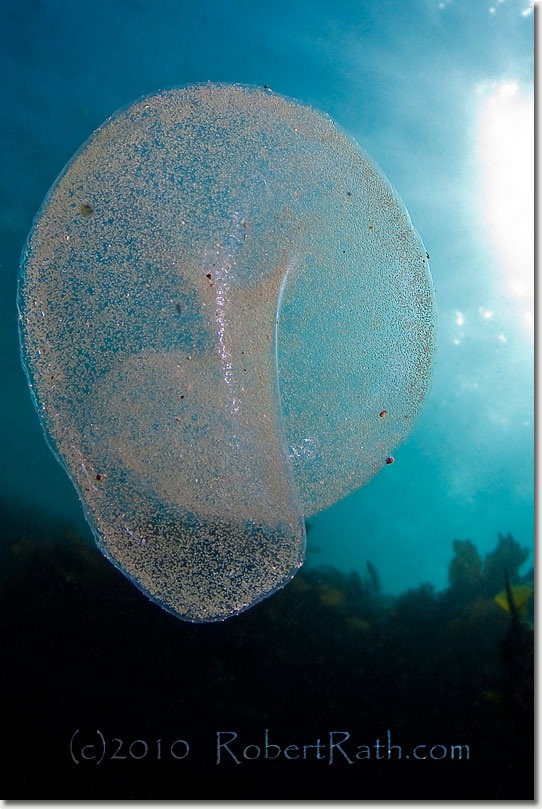
Portrait of a Sausage Jelly


My first recollection of Sausage Jellies is seeing masses of them washed up on our local beaches resulting in them being squished through each other’s hair, thrown at each other as in snowball fighting and generally not appreciating what they really were. We thought at first they were some strange jellyfish that seemed to have no sting. Soon someone started a rumour that they were really eggs, but eggs of what?

Well the rumours turned out to be true and indeed the Sausage Jelly is a blubbery mass of thousands of eggs of either the Conical Sand Snail Polinices conicus or the Sordid Sand Snail Polinices sordidus. These little snails are responsible for the very familiar sight of cockle shells washed up on beaches with neat little holes drilled in the side. The Sand Shell is predator and hunts these bivalves, attaching themselves to some poor cockle, drilling a neat little access hole with a rasp-like tongue and devouring the poor little critter now defenceless from attack.

This photo of a Sand Snail egg mass was taken last week while diving at Pt Noarlunga. This Sausage Jelly floating in the water presented the perfect opportunity to capture its beautiful form and show off the individual eggs distributed through its mass in way not seen in one simply washed up on a beach.

More photo’s from last week’s dive can be found here at Sigma 15mm FE First Tryout (Facebook Album) or my slideshow on Flickr.

Until the next post, take care out there and keep diving ( if that’s what you do! ) …Robert 🙂

Photo: Robert Rath, Sand Snail Egg Mass, Pt Noarlunga. Please ask if you want to know more about how this image was taken.


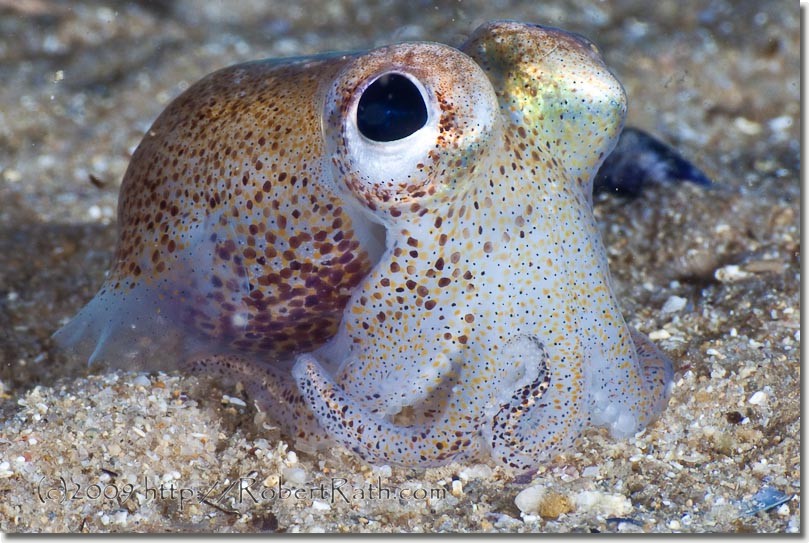
Juvenile Southern Squid Are Very Cute


Night diving is always great fun and often full of wonderful little surprises (big surprises are OK too so long as they are under 3m). Last night Matt and myself descended below the ever popular Pt Noarlunga Jetty just shy of midnight. The usual suspects showed up on cue and I got the chance to play a little bit more with my new rig.

About midway into the dive a little squid no bigger than a golfball turned up out on the sand. At first I thought he was one of the local Southern Dumpling Squid. The colours seemed right even if a bit pale, though you can never really tell with cephalopods. Those cute little bug eyes did not seem right though, they seemed too big for a dumpling squid. Shortly after taking this image he rose and swam directly at my camera lens. A behaviour I have never experienced with dumpling squid.

Today I had a closer look at the photograph, the eyes, the colours on the wings and the presentation of the chromatophores and decided he must be a juvenile Southern Calamari (Squid), Sepioteuthis australis.

All up we had a great dive and it was a real pity I could not convince a few other friends to join us. It seems than diving invitations are not so popular after 10pm on a normal working weeknight! Oh well, there’s always next time.

More photo’s from last night’s dive can be found here at Midnight Pt Noarlunga (Facebook Album) or my slideshow on Flickr.

Until the next post, take care out there and keep diving ( if that’s what you do! ) …Robert 🙂

Photo: Robert Rath, juvenile Southern Calamari, Pt Noarlinga Jetty (Night). Please ask if you want to know more about how this image was taken.


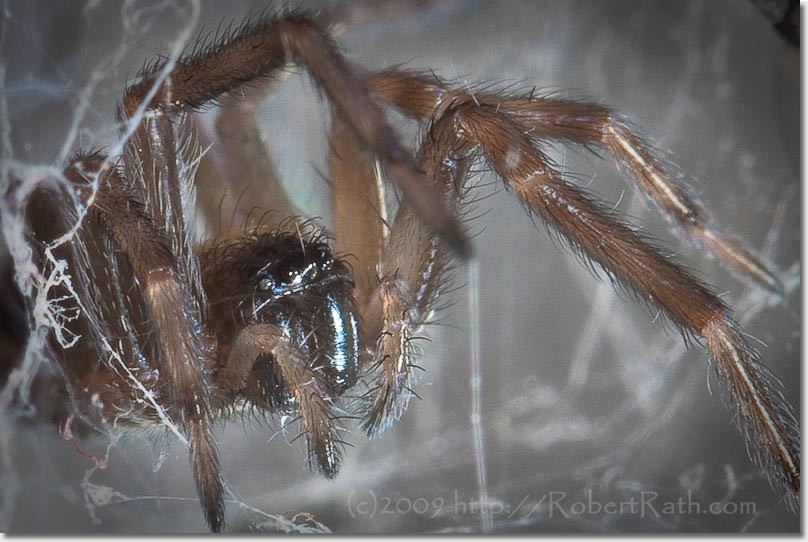
The Monster In Our Kitchen


Today I noticed a tiny tiny spider in a messy little web high up on the window frame and wondered what it would be like to be a fly! The amazing thing about really little things is how amazing they look from their own perspective instead of ours.

I hardly even noticed this little gal up there and when I did it was really a case of ‘so what’. But, once I shrunk down to her size it was a different story altogether! Thoughts of Frodo Baggins being be captured and dragged off by the great Shelob came to mind and in an instant I decided she had to go. Just as soon as I took a photo and returned to human size again of course! You just can’t let monsters live in your kitchen. You never know what mischief they will cause.

Nothing in the image gives any indication of her true size. In fact the frame is less than 5mm across!


Until the next post, take care out there and stay away from monsters! …Robert 🙂


Photo: Robert Rath: Shelalob (Shelob’s Australian cousin) ready to pounce!


Port Noarlunga Reef The Beautiful and Diverse Gap


Port Noarlunga is a bustling beach-side suburb about 40 minutes south of Adelaide. Easy to get to, easy to access the water via the jetty and with the Adventure Blue dive store close at hand makes Pt Noarlunga the most popular shore dive destination near Adelaide.

The main attraction here is an extensive reef system running parallel to the shore and accessible from the end of the jetty. The reef is broken into northern and southern sections with a deep gap separating the two. Depths range from 5m to 15m depending on which parts of the reef you dive.

Too many divers never really get to appreciate the fantastic beauty and diversity of this place because they limit their diving to the end of the jetty and the protected side of the northern reef system. This is especially true for new divers who complete some or all of their open water training here and only see a tiny part of the system. They risk overlooking the rest Pt Noarlunga has to offer because of their associations with their initial experiences.

A good way to really see the Pt Noarlunga Reef in a whole new way is to dive ‘The Gap’. Access to the gap is by a 300m snorkel south from the end of the jetty. Yes I know that sounds like a long way but it’s a much more pleasant 300m than walking the length of the jetty which everyone is prepared to endure! Just stay on the inside close to the reef and take your time to enjoy the critters in the shallows. You can dive this traverse if you like but your time in the Gap will be limited due to initial air consumption. The Gap is obvious where there is no more reef at or near the surface even on a low tide.

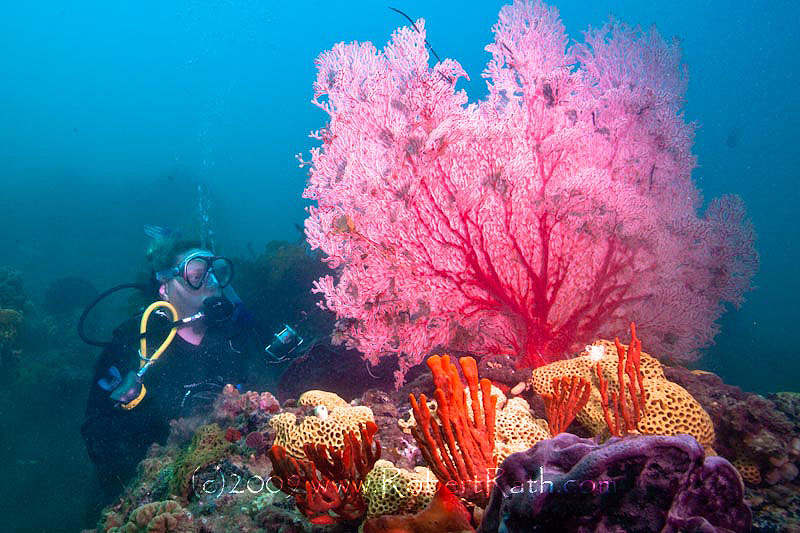
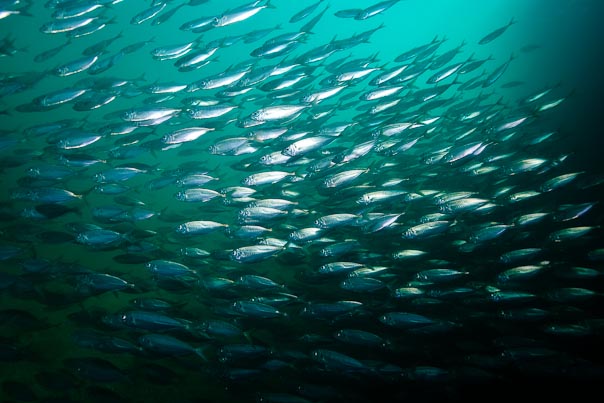
Once you descend into the Gap it is like nothing else you will have experienced on the inside of the reef. The seascape becomes one of big bommies and thick kelps. You’ll notice a big jump in the diversity and size of fish species. Stunning huge schools of Silver Drummer. Solitary Longnose Boarfish, Sweep and Old Wifes, many species of Leatherjacket, Blue Groper, Magpie Pearch, Western Talmas, Hulafish, Dusky Moorwong, Zebrafish and more. In other words, a fantastic cross section of South Australian reef fish. Colours abound with beautiful Sponges, Ascidians and Corals. Huge Gorgonian Fans catch nutrients in the current and many varieties of Algae complete the scene.

Watch your depth and air here as it is quite easy to get down to 15m and your increased air consumption may catch you by surprise cutting short your dive and enforcing a long snorkel back on the surface. With a third of your air used, start your journey back north along the outside of the reef. You can proceed the full 300m north on the outside if you are happy to clamber over the reef on surfacing to get back to the jetty or if the tide is high. Otherwise I’d recommend only going 100m north on the outside and then surfacing. Locate and traverse the narrow channel though the reef here back to the sheltered inside. Descend again, heading north for the remaining 200m return trip.

Good navigation skills are essential to get the best from this dive so make sure you have a compass and are comfortable with natural navigation techniques. Don’t worry too much about getting lost though as the worst result likely is to be red faced and endure a long snorkel back.

So if you are a regular Pt Noarlunga diver and have not yet experienced diving ‘The Gap’, then please make it your very next thing on your diving ‘ToDo’ list. If you have never dived Pt Noarlunga before then make the effort to spend the time to do two or three different dives here and make sure ‘The Gap’ is one of them.

Until the next post, take care out there and keep diving ( if that’s what you do! ) …Robert 🙂


Photo: Robert Rath: Belinda Rowland admires a stunning Gorgonian during last week’s dive.


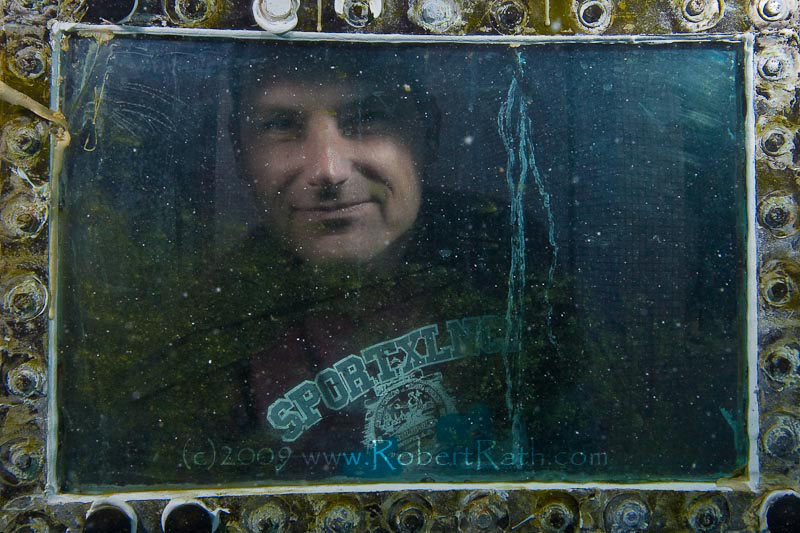
Portrait Of A Diver


‘Portrait Of A Diver’ is one of those images that I just can’t work out how to categorise. It was one of those surreal images that you never actually see for real. But the image and everything in is real, exactly as the photo was was taken.

Please comment on what you think you might be looking at in my ‘Portrait Of A Diver’ and what state my friend Gerry might actually be in?

Until the next post, take care out there and keep diving ( if that’s what you do! ) …Robert 🙂

Photo: Robert Rath 5DMkII on ‘L’ plates. (Please ask if you want to know more about how this image was taken.)


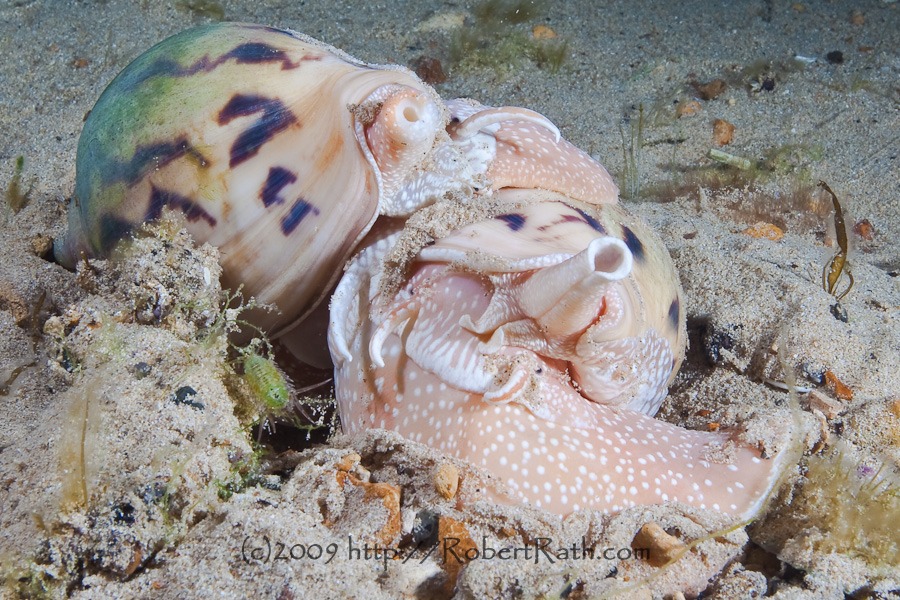
Midnight Mating Lightning Volutes Under Edithburgh Jetty


This mating pair of Lightning Volutes, Ericusa fulgetrum was a stunning find on our recent midnight dive under Edithburgh Jetty. We had seen a single volute earlier in the dive in the same location so probably the same guy ( or girl, does anyone know how to tell? ).

This brings me to the wonderful subject of night diving and picking your time. Most night dives take place around late dusk. This is more a factor of logistics and convenience with the added advantage of being able to prepare in some remaining daylight. But just as you will see different things at different times during the day the same applies to the night. As a youngster I remember being on holidays when some of the grownups would head out fishing after we had all gone to bed. The reason, picking the time based on the tides.

In and around Adelaide we often have low tides around midnight so if you can delay your start a few hours and don’t mind a late night then try a few midnight dives. You will almost certainly see a level of activity different to a dive soon after sunset. Another good time to see different things is in early morning hours before sunrise. The combination of running tide and remaining darkness will again provide opportunities to see creatures and behaviours different again. And finally try a dive just before dawn and watch first light creeping into the underwater world.

Next time you are planning on doing a dive after sunset try and get creative with the timing. Getting in the water at midnight or getting up at 2am is not for everyone but then neither is experiencing the full scope any one location has to offer.

Until the next post, take care out there and keep diving ( if that’s what you do! ) …Robert 🙂

Photo: Robert Rath 5DMkII on ‘L’ plates. (Please ask if you want to know more about how this image was taken.)

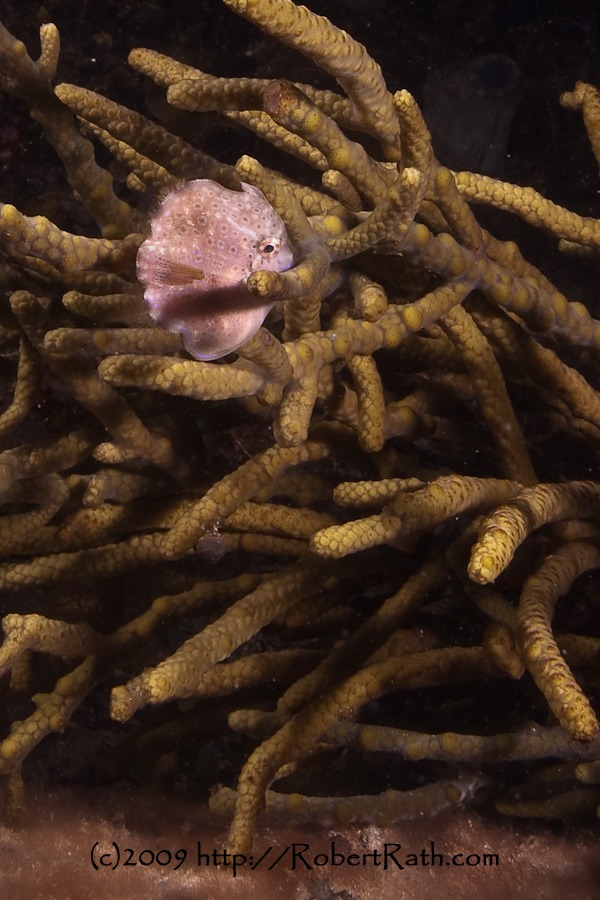
Southern Pygmy Leatherjacket


The Southern Pygmy Leatherjacket, Brachaluteres jacksonianus is a common sight under Edithburgh Jetty and always a very cute encounter. This little guy is trying to get some sleep considering it’s well after midnight!

He was just one of many wonderful encounters on Friday evening’s night dive with our good friends Iain and Susie. Actually Jennifer and Susie ran from the room when I suggested we go for a dive just about the time normal people go to bed. I think Iain only agreed because he thought I was actually joking. The dive that followed was one of our best night dives ever!

Notice something new? Yes, bigger and better photographs! I just love seeing big images and am distressed to find nothing bigger than tantalising thumbnails when I see an image I really like. So from now on I will be trying out a new image size of 900×600. Please let me know what you think and if I should keep with this size or go even bigger! Of course if you really want BIG images we can negotiate an off-site deal! 😉

There will be more Edithburgh images from last weekend along soon. Stay tuned.

Until the next post, take care out there and keep diving ( if that’s what you do! ) …Robert 🙂

Photo: Robert Rath 5DMkII on ‘L’ plates. (Please ask if you want to know more about how this image was taken.)

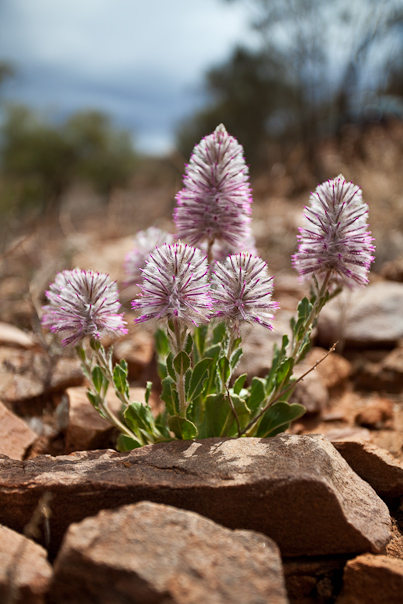
Arkaroola Wildflowers


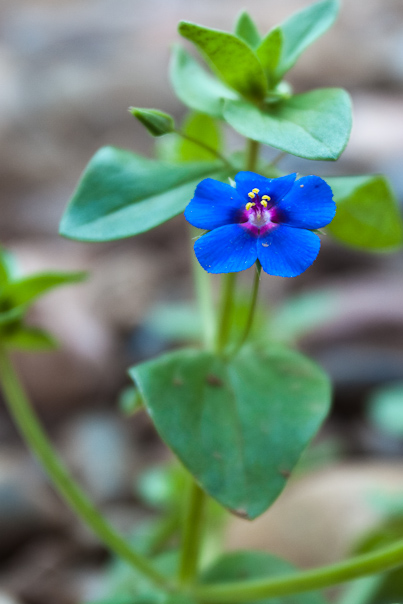
Delicate yet tough. Wild flowers grow in impossible conditions, near the abandoned Bollabollana Copper Smelter, Arkaroola-Mt Painter Wilderness Sanctuary, northern Flinders Ranges, South Australia.


Taming The Beast – My First Underwater DSLR Photography Experience


Yesterday’s dive at Port Hughes heralded the beginning of a new world for me with my first foray into underwater DSLR photography. Over the past four years I have been using Olympus compact cameras for all of my underwater photography. For the last two years I have been planning my transition to taking a DSLR camera underwater. Finally all of my research, planning, purchasing, customising and doing came to fruition as I stood looking out over Port Hughes Jetty with new rig in hand.

I was very nervous taking ‘so much’ camera down with me. I double-checked all the seals. I fitted the camera and snapped shut the housing. I fired a few shots to test the strobes. Something was not right but I could not put my finger on it. Then a few more shots revealed to my annoyance that the lens was switched to manual focus mode. So off came the back, out came the camera and I switched the lens to auto focus mode before reassembling everything.

Note to self 1: check lens auto focus switch.

My walk to the dive site was like carrying my buddy’s weight belt. This rig must be five times heavier than my compact! When in the water, however, the beast became gently positively buoyant and I forgot about the weight.

Note to self 2: attach a lanyard so it doesn’t float away.

My first 10 minutes in the water were spent in a state of paranoia and fear of a drowned camera. I continually peered into the front of the domed port looking for any hint of leaking seawater. After about 20 minutes I had calmed down enough to actually start using the camera only to discover that when I re-assembled the housing I had misaligned the focus preview lever.

Note to self 3: check the focus preview lever when fitting the housing back cover.

Here are my first impressions.

I found the rig clumsy and awkward. Swimming with it felt like I was dragging around a sea anchor. The strobes poked out at all angles and kept bashing the bottom or the jetty pylons. The quality of my shots was all over the place. The photos ranged from being drastically overexposed to being patchily lit as I struggled with all the controls being fully manual. I was rapidly starting to wonder why I had spent all this money. I realised for the first time how reliant I had become on using automatic aperture priority with TTL. I wondered what I had let myself in for.
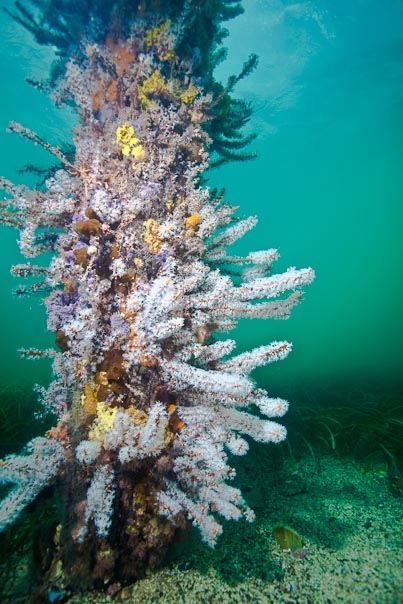


But now for the good part! Operation of the controls was an absolute delight. The shutter performance through the housing felt amazing, with a sensitive but positive action. I could fire off shots as quickly as I wanted (strobes permitting) without having to manage the eight seconds per frame I was used to from my Olympus in raw mode. The ultra fast low-light auto focus caught me by surprise again and again as the camera was ready to take the shot before I was! In short, every gripe I had ever had with my previous compact experience was not only put to rest but done so spectacularly.

So, even though I did not get any fantastic images from my first dive, I know this will only be a matter of time, practice, lots of diving and just getting to know my way around all the controls.

Maybe I’ll never really tame the beast, but we’ve got off to an excellent start. I know we’ll make a great team.

Until the next post, take care out there and keep diving ( if that’s what you do! ) …Robert 🙂

Photos: Robert Rath, 5DMkII, Port Hughes Jetty